Storing a barbecue through the wet season
The Top End build-up and east-coast summer storms rust a barbecue faster than a winter in Melbourne. Clean it, dry it, keep the cover honest, and do not trap a wet machine in plastic.
Tom Bellear, Outdoors editor · 6 July 2026 · 7 min read · 1,536 words
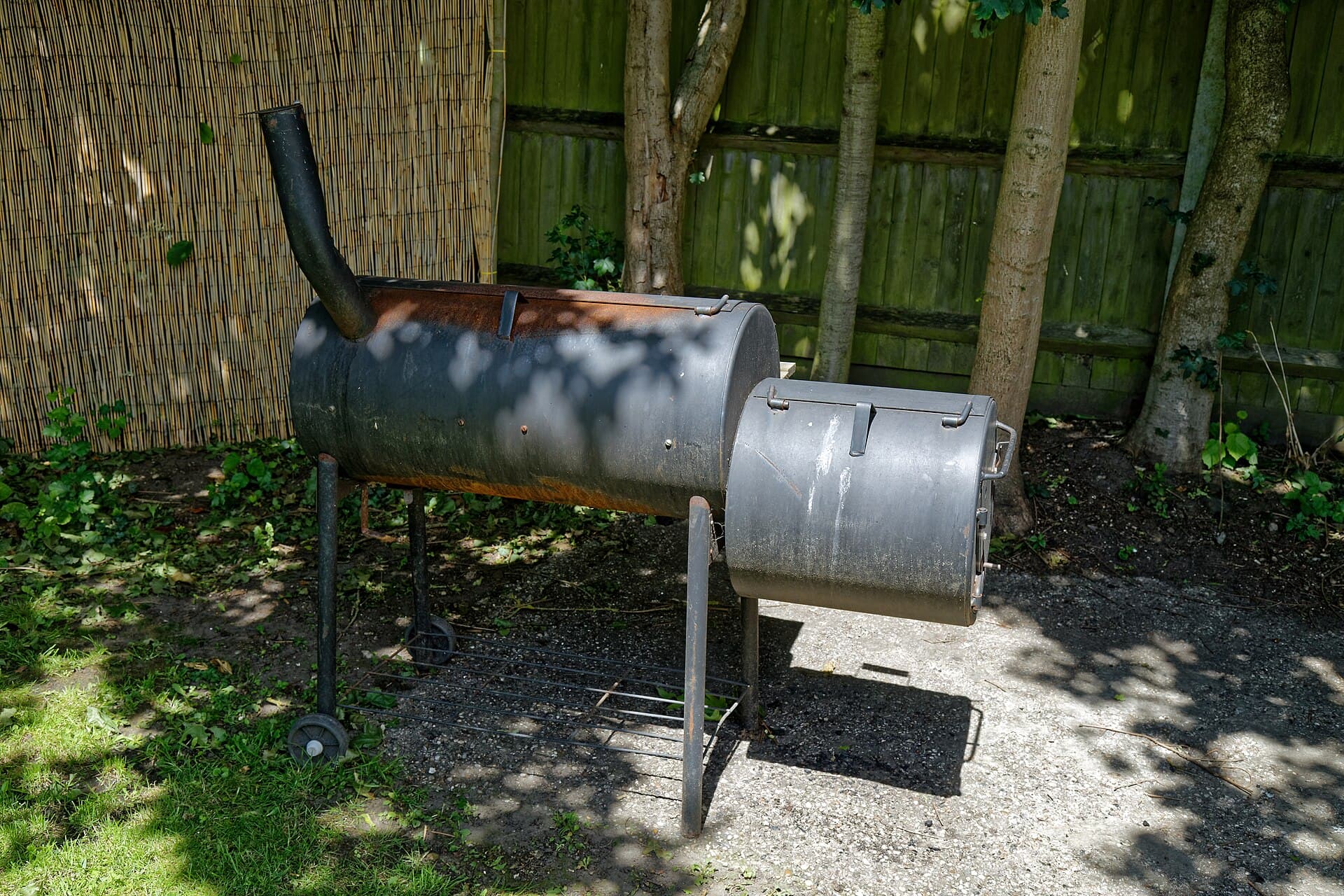
Photo: Beer-garden barbecue grill by Acabashi. CC BY-SA 4.0. Source: Wikimedia Commons. See image credits.

A barbecue left out through a northern wet, or through a season of east-coast thunderstorms, does not “rest.” It rusts, it grows a smell, and it fills with the insects that like dark wet steel. Melbourne winter is a milder version of the same physics. The tropics and the humid coast are the hard case.
Storage is not a tarpaulin thrown over a dirty grill on the first humid night. It is a clean, dry machine, a cover that sheds water, a bottle that is not sitting in a puddle, and a first inspection before you cook again.
Wet season is a rust season
Rust needs iron, water and time. The wet supplies water without pause. Night condensation under a cover supplies it even on a day that did not rain. Salt on a coastal esplanade supplies the electrolyte. Add a film of old fat and you have a poultice.
Darwin, Broome, Cairns and the Top End build-up are the textbook. The air is already wet. Steel that is a degree cooler than the night sweats. A cover becomes a greenhouse. East-coast summers — Brisbane through the Illawarra and the odd Sydney February — add the other pattern: a week of hard sun, then a cell that dumps fifty millimetres in an hour, then sun again. Water finds the firebox seam, the wheel bearings and the underside of the tray.
A trolley on grass sinks and stands in a pond. A built-in in a bench without fall holds a lake against the chassis. Both are storage problems even if you cook every weekend. If you are still designing the pad, fix the water in planning an Australian outdoor kitchen rather than buying a thicker cover.
Stainless is not exempt. 304 tea-stains. Cheap fasteners rust and stain the panel below. Cast-iron plates go orange in days if they go away wet. Enamel chips, then rusts from the chip. The brand — Weber, BeefEater, Matador, Jumbuck — changes how easy the parts are to dry, not whether physics applies.
Clean before you cover
Covering dirt is how you store a smell. Do the real clean first: burn-off, scrape, lift the grates and tamers, empty the tray, wash what needs washing, and dry on a low burner until the last steam has gone. The method is how to clean a gas barbecue. For iron, finish with the thin oil film from how to season a new barbecue, even if the barbecue is not new.
Take the loose parts you can store inside. Some people lift the plate into a dry laundry for the worst months. That is sensible if you have the space and you wrap it so it does not oil the linen. Do not store a greasy plate in a bedroom cupboard and act surprised.
Clear the cabinet. Half onions, a wire brush and a bottle of sauce left under the side burner are wet-season science projects. Take batteries out of ignition modules if you will not use the grill for a month; corrosion on a spring is a small, annoying death.
Look at the wheels and the frame. A smear of oil on a hinge, a check of the hub that already squeaks, and a decision about whether the trolley should move onto pavers before the ground saturates. Once the lawn is a sponge, you will not move it.
Charcoal and wood cookers need the ash out. Ash holds water like cement and rusts the bowl from the inside. Empty it cold, into metal, and dry the bowl. An offset with a thin firebox will rust through at the ash line if you leave a wet bed in it from November to April.
Covers, sheds and the trap of plastic
A fitted cover with a vent and a waterproof top is useful. A $12 disposable plastic sheet taped to the legs is a condensation chamber. If you can wipe the inside of the cover after a night and it is wet, the cover is making weather.
Put the cover on a cold, dry barbecue. If the box is still warm it will rain on itself. Pull the cover so it sheds, not so it ponds on the lid. A puddle on a vinyl roof finds a seam and drips onto the hood, where it sits. Some covers have a vent hook; use it. Some cooks put a tennis ball or a small pot on the lid under the cover to keep a peak. That works if it does not punch a hole.
A roof is better than a cover. A verandah, a carport or a shed with airflow beats the best polyester. In the tropics, a fully sealed shed still sweats. Leave a gap at the floor or a louvre. Do not press the grill against a wall that takes the north-west squall. Driving rain goes sideways.
If the barbecue lives in an outdoor kitchen, the “cover” is the design: a lid on the appliance, a fall on the bench, and cabinets that can take a splash. Closing pretty doors on a wet, greasy chassis is the same error as plastic, only more expensive.
Never wrap the whole machine in cling film, a sealed tarp with no air, or a plastic mattress bag. You are building a rust terrarium.
Dry, then cover. A wet barbecue under plastic is a rust tent.
Gas bottles and electrics
Shut the valve. If you are standing the barbecue down for weeks, disconnect the hose and fit the cap on the bottle. Store the cylinder upright, out of a puddle, out of a closed bedroom, and out of a hot tin box if you have a ventilated alternative. Do not lay it on its side “just for the wet.”
Inspect the hose when you disconnect. Wet-season sunlight plus water plus ozone is how rubber perishes. A cracked hose is cheaper to replace now than after a leak later. Coil it dry. The regulator does not want to sit in a cover-lake.
Electric barbecues and pellet cookers have boards, augers and cords. Unplug them. Dry the plugs. Do not leave a piggyback socket on the pavers. If the machine has a hopper, empty pellets into a sealed dry bin; wet pellets swell and jam. If you own a pellet grill, this is the season that decides whether it survives. The wider buying context is pellet smokers in Australia; the wet-season context is keep wood dry or do not bother.
Ignition batteries weep. Take them out. If the barbecue has a transformer, keep it off the ground. Residual-current devices exist because wet and power share a yard; use them.
East-coast storms versus the Top End
Treat the climate you have.
In the Top End and the wet tropics, assume every night is a condensation event. Check under the cover once a week. Wipe. Re-oil the plate if it looks dry or speckled. Cook when a break in the rain allows, because a machine that never gets hot stays wet in its bones. A short, hot burn-off on a dry afternoon is maintenance, not a party.
On the east coast, assume the storm will be sudden and sideways. If the forecast is a late southerly buster or a coastal trough, shut the bottle, cover a dry grill, and move the trolley under the most honest roof you have. After the cell, take the cover off, empty ponds, dry the box if water got in, and only then cover again. Leaving a flooded cover in place for three sunny days bakes a sauna.
Southern winters are a milder wet. The same clean-and-dry rule applies, but you may also be cooking through them. That is winter barbecue in southern Australia, which is a heat-retention problem that still hates a rusty plate.
Cyclone and severe-storm warnings are not cover weather. Move what you can move inside or into a proper shed. A trolley is a sail. A bottle is a projectile if it is loose. Do the ugly shuffle before the warning becomes a night.
Coming back to a stored grill
Do not light a wet-season barbecue on muscle memory. Take the cover off and look. Insects in the venturi. A nest in the hood. Orange on the plate. A tray of water that was once fat. A hose that has perished at the bend.
Brush the burners, reseat them, and do the spider check. Light one burner at a time in daylight. If it coughs, yellows or smells, stop. Soap-test the joints. Dry and re-oil iron. Run a fifteen-minute empty heat to drive out the last moisture before food goes on.
Taste the first cook with suspicion only if you skipped the wash. A stored grill can hold a mildew smell in a grease film. Heat and a clean tray fix most of it. If the smell is gas, that is not mildew.
Then return to the weekly habit. Storage is a pause, not a new personality. The care and safety work in a humid climate is mostly water: keep it off the iron, keep it out of the electrics, and give it a path off the pad. Do that, and the same barbecue will still be there when the dry returns.
Questions readers ask
- Should I leave the gas bottle connected all wet season?
- If you will not cook for weeks, shut the valve, disconnect the hose if the appliance allows, and store the bottle upright in a ventilated spot. A bottle left connected under a puddle of cover-water is a rust and regulator problem.
- Is a cheap plastic cover enough in Darwin or Cairns?
- A cover helps only if the barbecue goes under it dry and the cover can shed water. Thin plastic that sits on stainless and holds condensation is a rust tent, especially in the tropics.
- How do I stop the hotplate rusting while it sits?
- Clean it, dry it on a low heat, oil it thinly, and check it after the first big storm. If you see orange, rub it back and oil again. Do not hose the plate and cover it.
- Can I store a barbecue in a sealed shed?
- A dry, ventilated shed is ideal. A sealed tin box that sweats is only slightly better than the weather. Leave air paths, and do not store the grill against a wall that takes driving rain.
Keep reading
Flare-ups, hot spots and grease fires
A flare-up is fat meeting flame. A hot spot is uneven fire. A grease fire is a tray or tamer that has become fuel. They are related, and they are not fixed with a spray bottle of water.
Mina Rahman · 28 June 2026
Bushfire season barbecue safety
Total fire bans are local, they change with the day, and a backyard barbecue can be legal, restricted or forbidden. Check the fire service, then decide whether dinner belongs on the grill at all.
Tom Bellear · 20 June 2026
How to season a new barbecue
Seasoning is a thin polymer film on iron, not a flavour and not a wash. Do it once, then keep it with heat, oil and the right kind of cleaning.
Mina Rahman · 12 June 2026