Pellet smokers in Australia
A pellet barbecue is an electric wood fire. What electricity, humidity, pellet supply and bushfire bans do to that idea in an Australian backyard.
Callum Hartley, Hardware editor · 20 April 2026 · 6 min read · 1,365 words
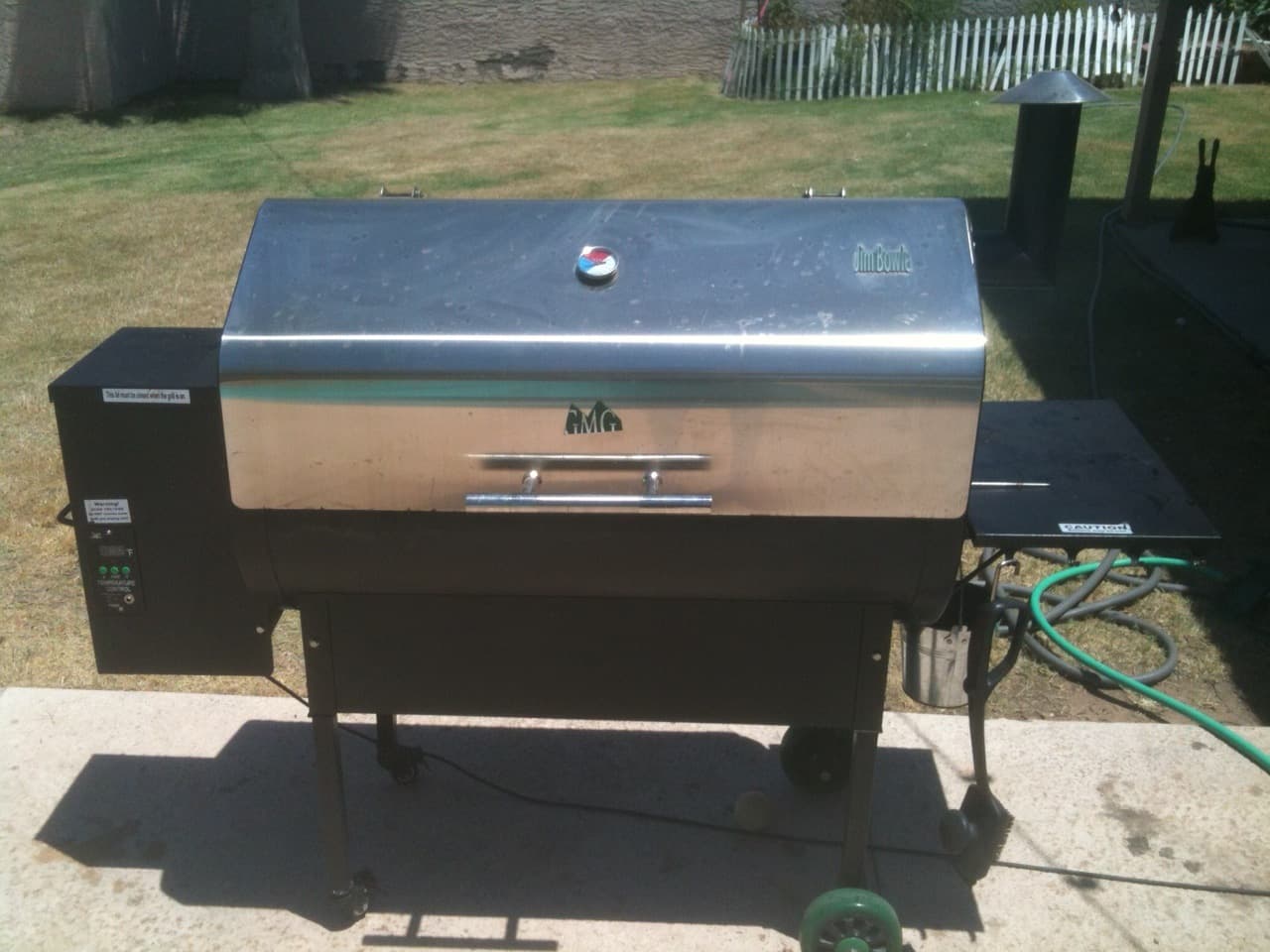
Photo: Pellet grill by Davidrubin12. CC BY-SA 3.0. Source: Wikimedia Commons. See image credits.

A pellet smoker is a wood fire with a computer. An auger drops compressed sawdust into a pot. A fan and a controller try to hold the temperature you typed. Traeger popularised the shape; other cabinets now sit in Australian backyards beside the gas trolley.
The convenience is real. The constraints are local. You need power. You need pellets that have not turned to mush in a humid shed. You need a fire service that still allows solid fuel on the day you planned the cook.
If you want a fire you manage by hand, look at kamado, kettle and offset smokers instead. If you have not yet chosen a class of grill, start with how to choose a barbecue grill in Australia.
What the machine is doing
Pellets are small cylinders of compressed timber. They are not heat beads and they are not a log. The hopper holds a few kilograms. The auger meters them. The fire pot burns them. The fan moves heat through the chamber.
The controller is a thermostat for a smoky oven. Set 120 °C for a long cook, 180 °C for poultry, 220 °C if the machine will go that high for a finish. The numbers on the display are the probe in the box, not the centre of the meat. Use a second probe in the food.
Startup makes smoke. A dirty fire pot makes more. A clean burn is thin. If the exhaust is thick and white for the whole cook, the pot is smothered or the pellets are wet. That flavour is not “more smoke”. It is incomplete combustion.
These machines can grill at the top of their range. Many of them are better as smokers that finish hot than as steak grills. A gas trolley or a kettle still sears with more honesty. Use the pellet cabinet for brisket, a ham, a shoulder, and the nights you want to walk inside.
Electricity is not a side issue
No power, no auger. No auger, no fire, unless you like a pot full of unburnt pellets. Site the smoker within reach of a weatherproof outlet. A lead under the back door and across the dew is how you get a trip and a ruined roast at 3 am.
Controllers hate brownouts and cheap timers. If you run a generator on a block, test the machine on that generator before you invite people. If the household RCD trips when the outdoor fridge and the smoker start together, that is an electrical job, not a barbecue job.
Battery backup units exist for some brands. They will hold a controller through a short cut. They will not invent pellets or dry a wet hopper. Treat them as a courtesy, not as a plan for a storm.
A pellet grill is a poor touring machine for the same reason. Holiday-park power is real until it is not. The portable camping brief still belongs to gas and, where legal, a small kettle.
Built-in pellet cabinets need the same outdoor point and a dry hopper door. They are an unusual first built-in in this climate. Gas is the simpler certified fire for a bench.
Humidity, rain and the hopper
Australian air is not Colorado air. Coastal humidity and a tropical wet will swell a bag of pellets that you left open. Swollen pellets jam the auger. Jammed augers stall the fire. The display will keep claiming 110 °C while the pot goes out.
Store pellets in a sealed bin, inside, off the concrete. Do not keep the opened bag in the hopper for a fortnight of sea air. Empty the hopper if you will not cook for a week, especially before a wet change.
Rain on the lid is usually fine. Rain in the hopper is not. Check the hopper lid seal. A cheap cover that pools water above the hinge is a design fault you will discover once.
Ash is fine dust. It goes everywhere, including into the fan housing if you never vacuum the pot. A pellet grill that is not cleaned — the same unfashionable work, different ash — will eventually fail to light. Empty the pot when it is cold. Do not hose the controller.
Dry pellets and a dry hopper matter more than the timber species printed on the bag.
In Darwin and in a Cairns wet, think hard before you buy this class. A kettle you can empty and a gas trolley you can cover are kinder. See storing a barbecue through the wet season.
Pellet supply outside the brochure
Species on the bag — hickory, mesquite, apple, “competition blend” — are often North American names on timber that was grown wherever the plant is. Local bags sometimes use Australian hardwood. Flavour differences are real and easy to overstate. A clean burn of a mild pellet will serve pork and poultry. A heavier hardwood pellet will sit better under beef.
What matters more is that you can buy another 15 kg before Sunday. Capital-city barbecue shops and some hardware aisles stock them. Regional towns may not. If you have to courier fuel, you have a hobby with a logistics department.
Do not run the hopper to empty on a long cook. The fire pot will go lean, then out, then fill with a slug of pellets when you refill and restart. That slug is a smoke bomb. Keep the hopper above a quarter and top it up with dry fuel.
Mixing a handful of Australian smoking wood chunks on a pellet cook is a fadsome idea that can work if the chunks sit where they smoulder, not where they choke the pot. Most people are better off picking a pellet they can repurchase and leaving the ironbark for the offset.
Cheap pellets throw more dust and more ash. They still cook. They clog faster. There is no independent score on this page. Buy a bag, run a chicken, look at the pot.
Bushfire bans and the neighbour
Pellets are solid fuel. On a total fire ban, many districts treat a pellet smoker like a wood heater you parked outside. A controller does not turn it into gas. Check the rule for your fire district on the day, every time, and do not argue with a volunteer about the brand name on the lid.
Bushfire-season barbecue safety is the piece to keep next to the cover. If bans are common where you live, keep a gas trolley as the legal cook. The pellet cabinet can wait for a milder day.
Startup smoke is the neighbour issue. A first lighting in a terrace courtyard will look like a fire. Tell the people next door, or cook when they are not hanging washing. A clean running burn is quieter than an offset. It is not invisible.
Strata and balconies are the wrong site. Hoppers, ash and a power point on a twelfth-floor balcony are a by-law argument you will lose. See balcony and apartment barbecue rules.
What to inspect before you buy
Look at the hopper lid and the gasket. Look at how you empty the fire pot. Look at whether the grates lift out. Look at the wheels on your pavers, not on a shop floor.
Ask about local service and about spare igniters, fans and controllers. An imported orphan with a dead board is a heavy table. Traeger and a few other lines have Australian parts paths. That matters more than a Wi-Fi graph of last Tuesday’s brisket.
Capacity is chamber length, not a social-media claim. A short cabinet will do a chicken and a tray of vegetables. A long cabinet will do a brisket and a shoulder. Measure the grate, then measure the meat.
A pellet grill will not teach you vents. It will teach you to trust a probe and to stop opening the lid. Those are useful habits on any hooded machine. For steak night, you may still want a hot grate and direct heat. For a set-and-walk whole chicken, the pellet cabinet is a fair Australian appliance — if the power is on, the pellets are dry, and the fire service has not closed the day.
Questions readers ask
- Do I need a power point for a pellet smoker?
- Yes. The auger, the fan and the controller all need electricity. An extension lead across wet grass is a poor substitute for a weatherproof outdoor point.
- Will a pellet grill run through an Australian summer storm?
- The fire will usually survive a shower if the lid stays shut and the hopper stays dry. A soaked hopper of swollen pellets will jam the auger and put the cook out.
- Are pellet smokers legal on a total fire ban?
- Often no. Many bans treat pellets as solid fuel. Check the fire service for your district rather than assuming a controller makes it gas.
- Can I buy decent pellets outside the capital cities?
- Sometimes, and sometimes you will wait on a courier. If the nearest stockist is a two-hour drive, do not start a twelve-hour brisket on the last bag.
Keep reading
Hood versus open grill in Australian wind
A hood is a lid that turns a grate into a small oven. An open grill is a fire you stand over. Wind decides which one still cooks in an Australian backyard.
Mina Rahman · 12 May 2026
Australian smoking woods, ironbark, red gum and apple
How local hardwoods actually flavour food on a kettle, kamado or offset — ironbark, red gum, apple and the woods to leave in the pile.
Tom Bellear · 1 May 2026
How to light and control a charcoal grill
Light heat beads or lump without a lake of fluid, then run vents and zones so an Australian kettle or kamado holds the heat you asked for.
Mina Rahman · 10 April 2026