Seafood barbecue prawns, barramundi and bugs
Prawns, barramundi and bugs like a clean hot grate, a little oil and a short cook. Buy them cold, dry them, and take them off the fire as soon as they turn opaque.
Jess Nguyen, Food editor · 22 January 2026 · 7 min read · 1,495 words
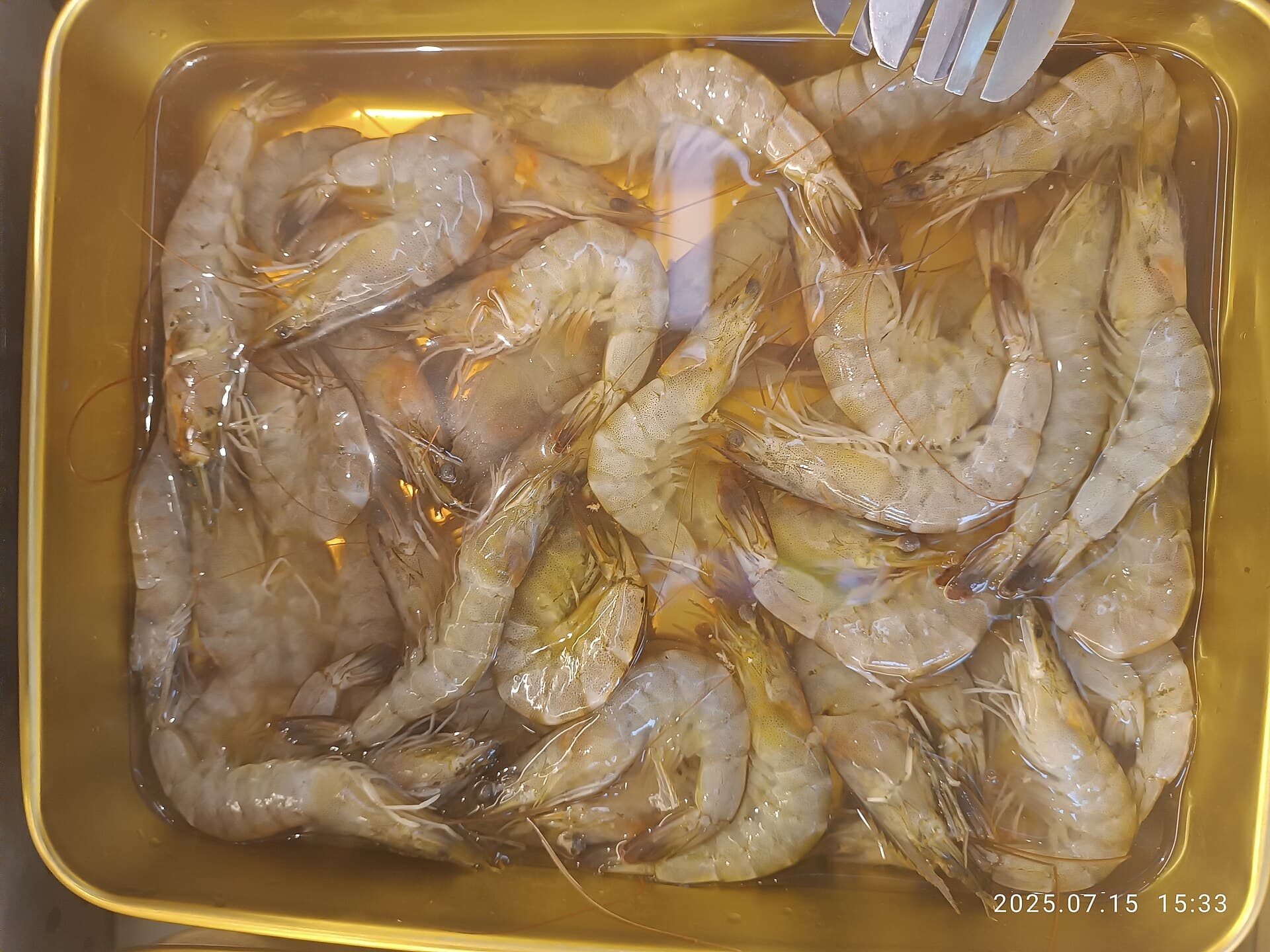
Photo: Prawns prepared for cooking by Wikimedia Commons contributor. CC0 1.0. Source: Wikimedia Commons. See image credits.

Seafood on an Australian barbecue is the shortest cook and the one people ruin by treating it like chicken. Prawns, barramundi and bugs are done when they have just gone opaque. Another two minutes does not make them safer. It makes them dry. The fire should be ready before the tray leaves the fridge.
This is a January-friendly menu if the day is not a heatwave and if you can keep an esky honest. It also sits happily next to Australia Day lamb if you do the seafood last, on a clean section of grate. It does not sit happily next to a neglected grease fire. Read flare-ups, hot spots and grease fires if your barbecue has not been cleaned since spring.
We are talking about common Australian fish-counter pieces, not a reef-to-table lecture. Buy what looks good that morning. Keep it cold. Cook it once.
Buying seafood for a grill
Prawns should smell clean and feel firm. Green (raw) prawns are what you want for the barbecue. Cooked prawns only need warming and will toughen if you treat them like raw ones. Shell-on, head-on king prawns are the celebratory buy. Peeled tails are the weeknight buy. Both work.
Barramundi is a sensible grill fish because the fillet is sturdy and the flavour is mild. Skin-on fillets are easier. The skin is a barrier between the flesh and the grate. A whole small barra is a handsome cook on indirect heat if you have the length on the grate. Frozen barra is acceptable if it has been thawed in the fridge and patted dry. Wet frozen-thawed fish sticks.
Moreton Bay bugs, Balmain bugs and similar flattened lobster relatives are a treat. They should be alive or very recently killed and kept cold, according to how your fishmonger sells them. If you are not confident about killing and splitting, ask the shop to split them. You are paying for the meat in the tail.
Mussels, scallops and squid are welcome extras. Mussels want a hot closed pot or a tray with a lid more than an open grate. Squid wants very hot and very fast, or it wants a long braise — nothing in between. Scallops want a hot plate and 60 seconds a side. Do not build a first seafood barbecue out of scallops and hope.
Keep the shopping in an esky with ice if the car is warm. Put it in the fridge at home. Do not marinate seafood on the bench while you light charcoal. Cooking through an Australian heatwave is relevant even when the protein is fish.
Prawns
Shell-on prawns can be cooked as they are, or snipped down the back to devein. A little oil, salt, chilli and lemon zest is enough. A soy-garlic mix is enough. Sugar in a prawn marinade is how you get black specks in 90 seconds. If you want sticky, brush it on as they come off. The longer argument is in marinades versus rubs.
Direct heat, clean grate. Two to three minutes a side for large king prawns in the shell is a common range. They are done when the flesh is opaque and they have curled. They will keep cooking on a hot platter. Take them a moment early if the platter is cast iron.
Peeled prawns need more oil and more attention. A grilling basket helps. Skewers help if you oil the skewers too. Do not walk inside for tongs. Have the tongs in your hand.
Heads and shells make a perfectly good leftover oil if you are organised: bake them later with oil, strain, and keep it for the next fish. That is a kitchen job. On the day, put a bowl for shells on the table so people are not walking through the garden with prawn heads.
Cooked prawns from a Christmas platter can go on the barbecue only to take a little smoke and heat. One minute. Then they are expensive rubber.
Barramundi
Dry the fillet. Oil it. Salt it. Leave the skin on. A squeeze of lemon belongs after the cook, not in a long acid bath that starts to “cook” the surface.
If the fillet is under about 2 cm, use a hot clean grate, skin-side down, and wait. The skin will complain and then release when it is ready. Flip once. The flesh flakes when it is done. A probe in the thickest part around 55 to 60 °C is a working target for a moist fillet. We are not reciting a health standard. If you need fish cooked harder, say so and accept a drier flake.
If the fillet is thick, or if your grate is a rusted relic, use a tray or a piece of well-oiled foil on the cool side with the hood down. You will lose the bars. You will keep the fish. A whole barra stuffed with lemon and herbs sits on the cool side at 180 °C until the dorsal flesh flakes. Times vary with weight. Probe near the spine.
Barramundi likes a simple sauce: lime and fish sauce, or a mango and chilli salsa that you made in the kitchen, or just olive oil and chopped herbs. It does not like a supermarket sticky marinade painted on at the start.
Oil the grate, not only the fish. A paper towel held in tongs with a little oil, wiped over a hot clean grate, is the whole anti-stick method. A thick layer of oil on a cold dirty grate is a smoke bomb.
Bugs and other shells
Split bugs in half lengthways. Crack the tail so the meat is easy to lift later. Oil the cut meat. A little garlic butter can go on in the last minute, off the direct flame so the butter does not burn.
Start cut-side down on a hot grate for two to four minutes depending on size. Then turn, shell-side down, to finish. The meat should be opaque and just firm. If you are unsure, take one half off and nick the thickest bit. It will cost you less than cooking the whole tray another five minutes.
Lobster tails, if that is the treat, follow the same split-and-oil logic. Marron and yabbies are a different, more delicate job and are easy to overcook. If you have flown them in for a party, consider a pot of salted water and a short time, then a finish on the grate for flavour. Pride is a poor reason to charcoal a yabby.
Oysters do not belong over a savage fire unless you like them cooked and you have a steady rack. We leave them raw with lemon and put the money into the bugs.
Heat, oil and sticking
Seafood fails for three mechanical reasons: a dirty grate, a cool grate, and a nervous flip. Clean the barbecue before the day, not during the first prawn. Heat it. Oil it. Put the food down. Leave it until it releases.
Another two minutes does not make seafood safer. It makes it dry.
Two zones still matter. Prawns and bugs are direct. A thick barra or a whole fish is indirect, then maybe a kiss of direct heat on the skin. When fat from earlier lamb or snags flares, the fish moves to the cool side. You cannot talk a grease flare out of a piece of barra.
Do not crowd. Steam is the enemy of browning and the friend of sticking. Cook in batches. Hold finished seafood on a warm platter in the shade, not in a closed esky where it will keep cooking and then sit in its own juice.
A light marinade is 15 to 30 minutes. Anything with pineapple or a lot of lemon for an hour is how prawns go woolly. Salt them closer to the cook if you did not marinate.
Serving with salads
Seafood wants acid and crunch, not another heavy starch, unless you are feeding teenagers. A slaw, a cucumber salad, grilled corn, bread, and a bowl of lemon. If the rest of the table is vegetarian, halloumi can share the last of the fire after the fish is off, or before, if you are willing to brush the grate.
Wine and beer advice is not our job. Shade is. Fish sitting on a black slate in January sun is a warm plate of regret in fifteen minutes. Serve it and eat it.
If this seafood spread is the centre of a larger backyard lunch, the rest of the thinking is in how to host a backyard barbecue for a crowd. Buy more ice than you think. Keep raw juice away from ready-to-eat salads. Use a separate board for raw prawns and for tomatoes.
A good seafood barbecue is over quickly. That is the point. Light the fire, cook the shellfish while people are standing up with a drink, sit down to the barra, and stop adding “just one more minute” because the last piece looks paler than the photograph.
Questions readers ask
- Should I barbecue prawns in the shell or peeled?
- Shell-on prawns are more forgiving and stay juicier. Peeled prawns cook faster and take a marinade better. If they are peeled, oil them and do not walk away.
- How do I stop barramundi sticking to the grate?
- Start with a clean, hot, lightly oiled grate and a dry, oiled fillet. Do not flip until it releases. A tray or a piece of foil on the cool side is a valid rescue, not a failure.
- Are Moreton Bay bugs worth the money on a barbecue?
- They are a treat, not a weeknight staple. Split them, oil the meat, and grill cut-side down briefly. Overcooked bug meat is expensive cotton.
- Can I cook seafood and lamb on the same barbecue?
- Yes, if you do the seafood last on a brushed grate, or use a tray. Lamb fat on a barra fillet is a flavour most people do not want.
Keep reading
How to host a backyard barbecue for a crowd
Feeding a crowd on an Australian barbecue is a sequencing problem. Two zones, a short menu, cold drinks in the shade, and a plan for who eats when the first tray is ready.
Jess Nguyen · 16 April 2026
Vegetarian barbecue halloumi, mushrooms and vegetables
Halloumi, mushrooms and firm vegetables can be the whole barbecue, not a sad side. Give them two zones, oil, salt and the same attention you would give a chop.
Jess Nguyen · 6 April 2026
Australia Day lamb on the grill
Lamb chops for the impatient, a butterflied leg for the table, and salads that survive January. Light early, watch the fire bans, and do not cook through the worst of a heatwave.
Jess Nguyen · 12 January 2026