Cooking through an Australian heatwave
A 42°C backyard is a food-safety problem before it is a recipe problem. Cook early, keep food cold, drink water, and use the oven when the yard is the worse kitchen.
Jess Nguyen, Food editor · 8 January 2026 · 7 min read · 1,558 words
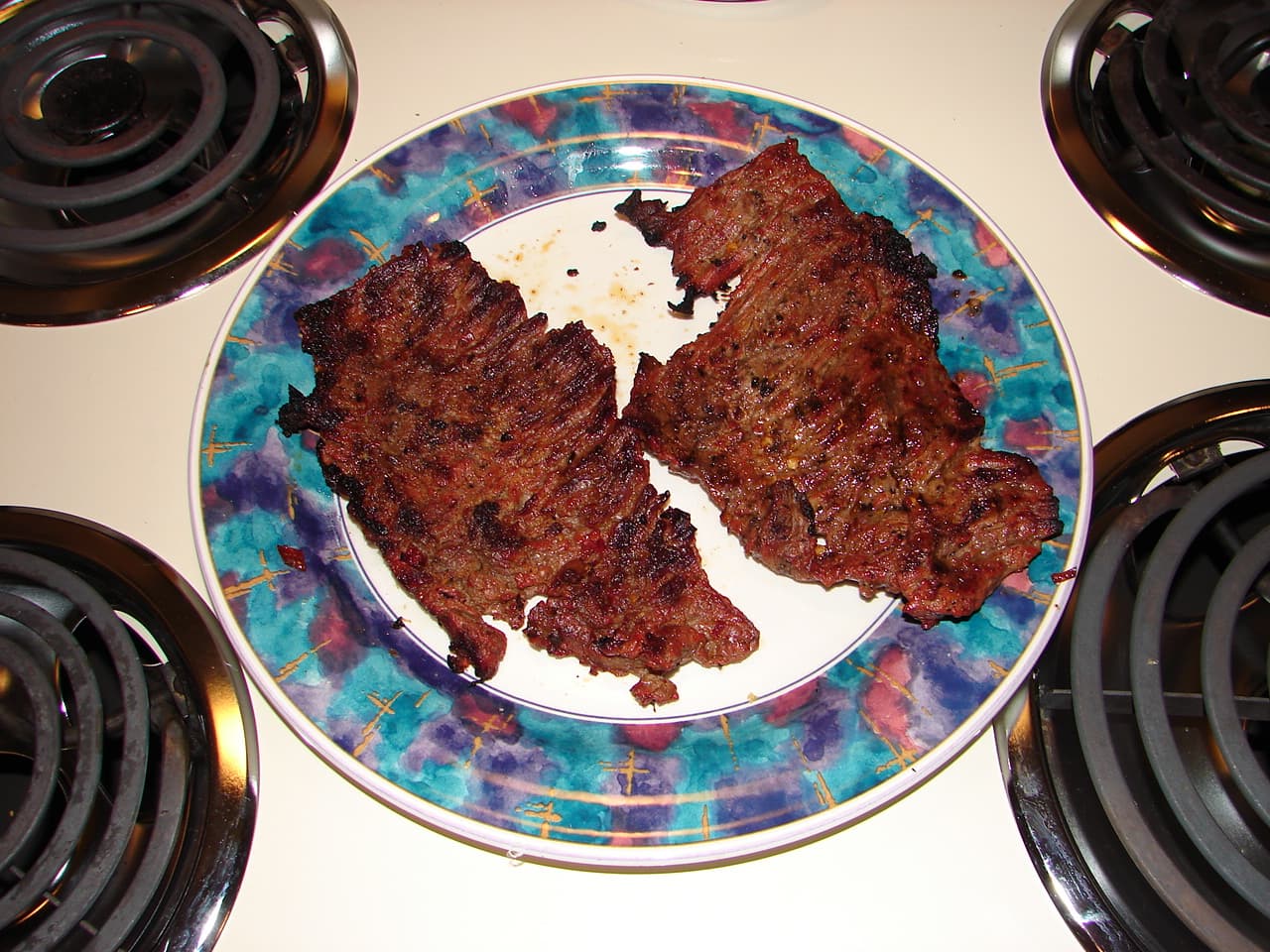
Photo: Grilled skirt steak by Wikimedia Commons contributor. CC BY-SA 3.0. Source: Wikimedia Commons. See image credits.

A heatwave cook is not a test of toughness. It is a logistics problem with a food-safety clock. The yard is hotter than the kitchen, the fridge is working harder than the grill, and the person standing at the hood is losing water faster than the steak.
This is written for the southern and inland pattern: western Sydney, the Adelaide plains, inland towns, a Perth easterly that does not break. Coastal humidity in Brisbane or Darwin is a different misery with the same rules about time and cold. The australian seasons hub is the map. January is not July.
The clock matters more than the recipe
Decide the eat time first, then work backwards, then move it earlier. A 6pm dinner that looked civilised in the invitation is a 6pm stand in stored heat, radiating pavers and a westerly that has been switching the washing all day. Mid-morning and late evening are the two windows that still make sense. Many of the best heatwave meals are cooked at eight in the morning, rested, chilled, and finished or sliced when people arrive.
Write the sequence. Fridge space. Esky space. What is cooked first. What can be held cold. What must be served the moment it hits temperature. A heatwave is unforgiving of the host who “just has to do the chicken now” at 4pm because they did not start the brine yesterday.
If the day is also a fire-rated day, check the fire service before you check the marinade. A legal gas cook at 8am can become a banned or foolish cook at 3pm. Bushfire-season barbecue safety is the companion, not an optional sidebar.
Guests will run late. Food will not. Have a hold plan that is cold, not a tray on the table under a tea towel in the sun.
Cook in the morning. The afternoon belongs to the esky.
Food safety when the yard is 42°C
Bacteria do not care that it is a public holiday. The danger band for perishable food is roughly 5°C to 60°C. On a heatwave patio the air itself is inside that band, and a steel tray is a solar oven.
Keep raw meat in the fridge until you need it. If you want a steak off the boil of the fridge, rest it in the kitchen, not beside the grill. Minutes, not an hour on a bench that is hotter than a summer car. Mince, poultry and seafood get even less of that courtesy. They go from cold to fire with a short stop.
Use a thermometer on the cook. Colour is a worse guide when you are rushing and the surface is searing in a fierce ambient. Chicken is done when it is done at the bone, not when you are done standing in the sun.
Cool leftovers fast. Shallow containers, fridge space you actually have, and no “it can sit while we have another drink.” Rice, gravies and cut salad wilt into the problem list as fast as chicken.
Ice is a tool. An esky with a working drain, ice that was frozen in advance, and a rule that the raw-meat esky is not the drink esky. Meltwater is not a marinade. If you are serving seafood, keep it on ice until the grate is ready and get it back to shade as soon as it is cooked. Prawns left on a hot platter are a colour photograph and a bad idea.
Hands, boards and tongs still need the split between raw and cooked. Heat makes people sloppy. The board that held chicken cannot hold the sliced tomatoes unless it has been washed. This is true every day. It is expensive on a day when everything is already warm.
Cook early, rest later
The useful heatwave pattern is: cook, rest, chill, serve. A whole chicken done at 9am can be carved at six, cold or brought back to a friendly temperature in a low oven. Skirt steak can be grilled hard in the morning, cooled, and sliced for a late lunch. Vegetables can be grilled, dressed, and held in the fridge, which is how a vegetarian spread survives a 43°C afternoon better than a pile of chops.
If you must cook when people are there, cook fast and cook covered. Preheat in the last coolness you have. Have the food portioned. Do not start a project cook. A heatwave is not the day you invent a seven-hour brisket unless you started before dawn and you like disappointment.
Resting still matters. Rest in the shade, in the kitchen, on a board that is not in the wind. A rest on the side shelf of a barbecue in full sun is more cooking, then cooling, then sitting in the band you were trying to avoid.
Slicing can wait until service. A whole rested piece holds better than twenty slices drying on a platter. If you are feeding a crowd, the traffic plan in how to host a backyard barbecue for a crowd still holds; add ice and subtract the queue at the grill.
Hydration for the cook, not just the guests
The person at the barbecue is standing next to a second sun. They will under-drink if they are performing. Put water where they are, not where the drinks table photographs well. A bottle in the shade of the cabinet, refilled from the kitchen, is more useful than a bathtub of warm beer.
Alcohol is a diuretic and a judgement tax. It is fine as a guest drink. It is a poor sole fluid for the cook on a 42°C slab. Eat something salty and something with water in it — cucumber, melon, a sandwich — before you decide you are “fine.” Heat illness is not a vibe you can push through with character. Dizzy, stopping sweat, a headache that arrives like a wall: sit down inside, cool down, hand the tongs over. Dinner can wait. If someone is confused or collapsing, that is emergency-service territory, not a recipe note.
Shade the cook. A hat, a shirt that covers, and a patch of real shade to step into between lid openings. Bare feet on a slab are a hospital story. Shoes.
Guests need the same water and the same shade. A backyard that is only sunny furniture is a car park. Move the table. If you cannot, move the time.
When the oven is the better tool
The oven is indoors. It is not cooler than the house, but it is not 50°C of radiating stone plus combustion plus wind-blown grit. Use it.
Use it when a fire ban or a restriction says the grill is not the tool. Use it when the only person who can manage the fire is already cooked. Use it when the menu is a roast that would have you hovering for an hour with the hood up. Use it for the hold: food cooked on the grill at 8am can finish or reheat in a moderate oven at six while you talk to people.
A grill plate on the stove, a fan-forced tray of vegetables, and a salad is an Australian dinner. It does not need an apology. The photograph of two steaks on a plate, even if they came off a cooktop, is still dinner. Save the theatre for a week that is not a health warning on the radio.
Electric indoor cooking is also the balcony answer when the building or the day is against you. That constraint is balcony and apartment barbecue rules. Heatwave plus strata plus a fire rating is three reasons to stay inside.
If you do use the outdoor grill, pick the smallest fire that will do the job. Every extra burner is extra heat next to a person. A small hooded Q-class or a two-burner on a shaded patch beats lighting a six-burner monument because you own it.
Menu choices that survive the heat
Think in fast proteins and cold plates. Skirt, flank, boneless chicken, prawns, halloumi, mushrooms, sliced eggplant, corn that you can chill and eat later. Avoid the menu that needs a glaze every four minutes and a conversation at the grill.
Salt early in the fridge, not on a hot bench. Sugar late, because sugar burns and you will be less patient about flare-ups when you are trying to get out of the sun. The flare-up drill is the same as always — move the food, lid down, no water on fat — and it is in flare-ups, hot spots and grease fires. In a heatwave you have less attention to spare for a tray fire. Empty the tray before you start.
Drinks: water first, then whatever else. Ice in the drinks is not ice stolen from the meat esky.
After the cook, do the short clean while the box is still warm, then get inside. A heroic deep-clean at 5pm on a 41°C slab is how people faint. Cover only when the appliance is dry. The machine will still be there at 8am tomorrow, which is a nicer hour to finish the job.
Heatwave barbecue is possible and sometimes lovely — a still, early morning, a fast skirt, a table in the only shade. It is not obligatory. The country will still be here when the change comes through. Cook to the day you have, not the day the invitation assumed.
Questions readers ask
- Is it safe to leave raw meat out to come to room temperature in a heatwave?
- Not for long, and not on a 40°C patio. A brief rest in the kitchen is enough for a steak. Poultry, mince and seafood should stay cold until they are close to the fire.
- When should I give up and use the oven?
- When a fire ban says so, when the cook is the only one outside in full sun, or when the menu needs an hour of lid-up work you will not stay with. An oven roast is a better dinner than a heat-stroke barbecue.
- What should I cook if I still want the grill?
- Fast pieces, a lid that stays down, and food that can be chilled hard then seared. Skirt, prawns, vegetables and halloumi beat a seven-hour brisket on a 43°C afternoon.
- How do I keep salads safe on a hot day?
- Keep them in the fridge or in an esky with ice until the meat rests. Mayonnaise, rice and cut melon are not decoration; they are perishable food sitting in the sun.
Keep reading
Winter barbecue in southern Australia
A July cook in Victoria, Tasmania, South Australia, the ACT or southern New South Wales is a heat-retention problem. Wind, a lid and the early dark decide the menu more than the recipe.
Tom Bellear · 14 July 2026
Storing a barbecue through the wet season
The Top End build-up and east-coast summer storms rust a barbecue faster than a winter in Melbourne. Clean it, dry it, keep the cover honest, and do not trap a wet machine in plastic.
Tom Bellear · 6 July 2026
Flare-ups, hot spots and grease fires
A flare-up is fat meeting flame. A hot spot is uneven fire. A grease fire is a tray or tamer that has become fuel. They are related, and they are not fixed with a spray bottle of water.
Mina Rahman · 28 June 2026