Natural gas versus LPG barbecue in Australia
Town gas is a licensed connection. LPG is a bottle you can move. How heat, apartments, changeover and certification actually differ on an Australian barbecue.
Callum Hartley, Hardware editor · 2 April 2026 · 6 min read · 1,376 words
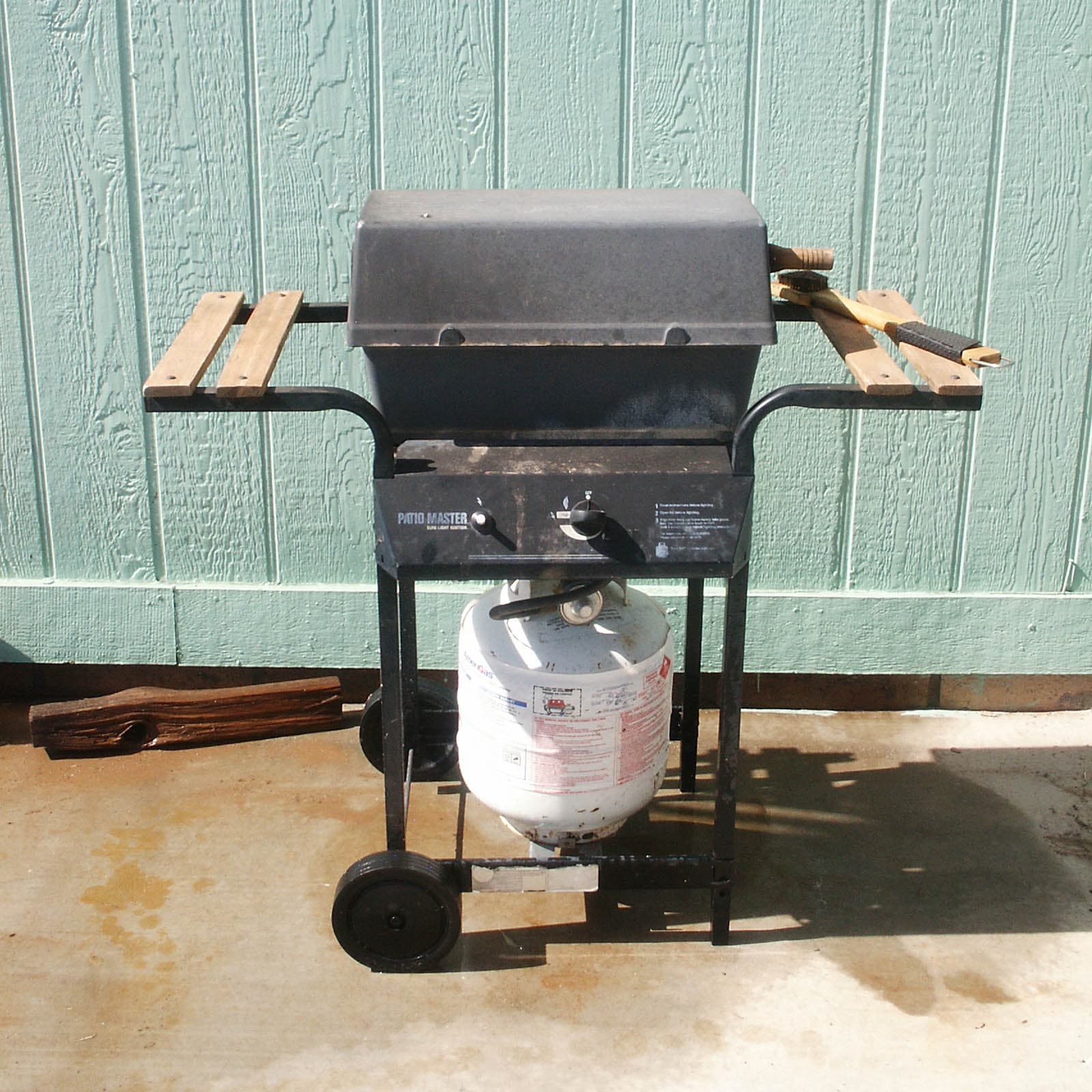
Photo: Propane gas barbecue by Owen Kelly. CC BY 3.0. Source: Wikimedia Commons. See image credits.

Australian barbecues run on two gases that are not interchangeable. LPG comes in a bottle. Natural gas comes from a meter on the house. The burners, the jets, the regulator and the person who is allowed to connect them are different.
People convert for two honest reasons: they are tired of driving a 9 kg to the servo, or they are building a built-in and want a fixed point. People convert for one dishonest reason: they think a different fuel will make the same cheap trolley cook like a restaurant grill. It will not.
This is a fuel desk, not a legal opinion. When the work touches the house, you want a licensed gasfitter and the certificate that goes with the job. The broader buying path is still how to choose a barbecue grill in Australia.
What each fuel actually is
LPG in this country is mostly propane, sold in exchange bottles. The common barbecue size is 9 kg. Camping bottles are smaller. The grill has a regulator that drops bottle pressure to what the burners expect, and a hose that should be dated and intact.
Natural gas is methane from the street main, metered at the house, and piped to appliances. An outdoor barbecue needs its own certified point — often a bayonet or a fixed connection — and a head that was built or converted for that gas. The pressure at the burner is lower than LPG.
You cannot screw a natural-gas hose onto an LPG bottle and “see how it goes”. You cannot put LPG jets on town gas and expect a clean flame. Yellow, lifting, or roaring flames are a sign the mixture is wrong, not a sign you should turn the knob and hope.
Some trolley brands sell both versions of the same head. Some sell a conversion kit with new jets and a new regulator. The kit is a parts list for a gasfitter, not a Saturday project with a YouTube tab open.
Why a licensed gasfitter is not optional
Natural gas is a house service. The run from the meter to the outdoor point, the isolation tap, the connection to the grill, and the commissioning of the burners are licensed work in every Australian state and territory. The details of the ticket vary. The need for one does not.
A built-in on town gas without a certificate is a problem at sale time and a problem if something goes wrong. A trolley on a DIY bayonet in a rented courtyard is a problem with the agent and with the insurer.
LPG trolleys that use a bottle, a regulator and a hose are consumer appliances. You can connect a sound hose to a sound bottle. You cannot run a copper line from a cylinder locker through a wall and call it a weekend job. Fixed LPG pipework is also licensed work.
Ask the fitter to show the isolation tap, to light every burner, and to leave the certificate where you can find it. If the flame is still wrong after conversion, do not “live with it”. Call them back.
The certificate is part of the barbecue. Keep it with the manual, not in a pile of tile receipts.
Heat output and what you will notice
Marketing megajoule numbers are not a lab test we ran, and they are not a reason to buy a six-burner. What you will notice in the yard is this.
LPG lights hard and hot. A cheap two-burner on a 9 kg will still sear a steak if the wind is kind. The flame is compact. Preheat is short.
Natural gas often feels softer at the same knob position. The head may need a longer preheat. A hood becomes more important, because you are holding heat in the box rather than relying on a fierce jet. That is one more reason the hood versus open argument matters on town gas.
A correctly converted premium head — BeefEater, Heatlie, a solid Spirit-class trolley — will still roast a chicken at 180–200 °C. A thin-lid budget trolley that was already marginal on LPG in a breeze will feel worse on natural gas. Do not convert a dying grill to save on bottles. Replace the grill.
Side burners and woks are the first things to feel underpowered after a sloppy conversion. If you buy a head for a wok, tell the gasfitter. Jet choice is not one-size.
Charcoal and pellets are not in this comparison. They are other fires. See lighting charcoal and pellet smokers in Australia if gas is not the point.
Bottles, changeover and the mid-cook failure
The LPG failure mode is running out. A 9 kg will last a careful household many weeknights and still die in the middle of a crowd if you did not weigh it.
Changeover is a habit. Keep a spare bottle. Swap before you light a roast, not after the flame goes yellow and shrinks. Store bottles upright, off soil, out of the closed car on a 40 °C day, and away from the fire.
Inspect the hose at the start of summer. Cracks, sun-brittleness, and a regulator that sits in coastal salt are ordinary wear. Replace them with parts that match the appliance. Cheap no-name regulators are how you get an unstable flame.
Trolley cupboards hide the bottle from the sun and from guests. They also hide a leak. If you smell gas, shut the bottle, take it into open air, and do not hunt with a flame. Soapy water on fittings is the old check. A hiss you can hear is already too much.
Camping bottles and Q-class portables have their own hose story. Read the portable camping piece before you mix a 9 kg hose with a lunchbox grill.
Natural gas does not run out mid-cook unless the household meter or the street does something unusual. The failure mode is a tripped isolation, a faulty ignition, or a burner full of spider webs after winter. Check the burners when you clean in spring.
Apartments, strata and small yards
This is where fuel choice is not about flavour.
Many apartment schemes ban LPG bottles on balconies above a certain size, or ban all gas, or ban all flame. Natural gas to a balcony barbecue is rare and still needs the building’s approval and a fitter. Charcoal is almost never allowed on a high-rise balcony.
Read balcony and apartment barbecue strata rules before you buy. An electric plate is the unfashionable answer that keeps you legal.
Townhouses with a tiny courtyard can take a 9 kg trolley if the by-law is silent and the pad is safe. They are a poor site for a natural-gas run if the only path is through a neighbour’s wall. A portable on a stand, with the bottle on the ground, is often the adult choice. See the Q, Family Q and Spirit class guide.
Houses on a main still have to think about the outdoor point. The hose should not cross a path. The isolation tap should not sit behind a pot plant. The grill should not live under a window that is the only ventilation for the kitchen.
Which fuel for which project
Stay on LPG if you rent, if you move the grill, if you tour, if there is no meter, or if you do not want a fitter on site. Buy a better trolley or a better portable. Keep a spare bottle.
Quote natural gas if you own the house, the meter is already there, you are building a bench, and you are tired of bottles. Get the fitter’s price before you buy the head. Buy a head that holds heat.
Do not convert a rusted budget grill, a machine with no spare parts, or a portable that was never designed for a fixed point.
Do not use gas on a total fire ban if your local fire service has restricted it. Many districts still allow gas when they ban solid fuel. Some do not. Check. Bushfire-season barbecue safety is the seasonal rulebook.
Fuel will not teach you two-zone cooking. A hood, a grate that holds heat, and indirect versus direct will. Pick the gas that matches the house, then cook something ordinary before you invite people for lamb.
Questions readers ask
- Can I convert my LPG barbecue to natural gas myself?
- No. Jet sizes, regulators and the hose are different, and the connection to the house must be certified by a licensed gasfitter. A DIY conversion is how you get a dangerous flame and a voided insurance conversation.
- Why does my natural-gas barbecue feel gentler than the old LPG one?
- Natural gas is delivered at a lower pressure and often with a different energy density at the burner. A properly converted head should still cook; it may need a longer preheat and a hood that holds heat.
- How do I know a 9 kg bottle is empty?
- Lift it or stand it on a cheap scale before you cook. A full 9 kg of LPG plus the steel is heavy; an empty bottle is not. Do not wait for the flame to die under a roast.
- Is LPG allowed on an apartment balcony?
- Sometimes a small bottle is allowed, often nothing with a flame is allowed, and charcoal is almost never allowed. The by-law wins. Read it before you buy a trolley you cannot park.
Keep reading
Hood versus open grill in Australian wind
A hood is a lid that turns a grate into a small oven. An open grill is a fire you stand over. Wind decides which one still cooks in an Australian backyard.
Mina Rahman · 12 May 2026
Australian smoking woods, ironbark, red gum and apple
How local hardwoods actually flavour food on a kettle, kamado or offset — ironbark, red gum, apple and the woods to leave in the pile.
Tom Bellear · 1 May 2026
Pellet smokers in Australia
A pellet barbecue is an electric wood fire. What electricity, humidity, pellet supply and bushfire bans do to that idea in an Australian backyard.
Callum Hartley · 20 April 2026